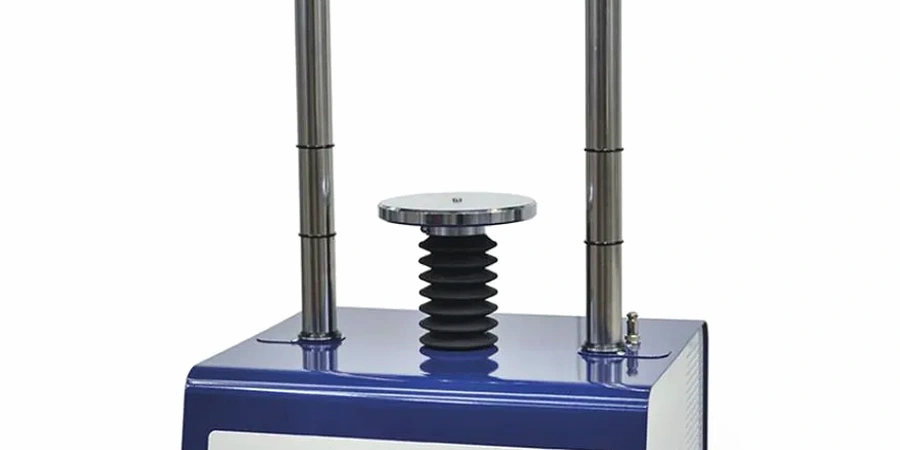
ASTM D4767 and D2850 define the standard for triaxial compression testing, but in Concord the reason we run these tests goes beyond checking a box. The city sits on a mix of Quaternary alluvium and older sedimentary formations that drain inconsistently. When you put a footing three feet into Montezuma clay or a silty lens near Willow Pass Road, the undrained shear strength can swing by 40 percent within a single borehole. Our lab runs consolidated-undrained (CU) tests with pore pressure measurement as the default for any project east of I-680, because the groundwater in this part of Contra Costa County is shallow and highly reactive to loading. We also correlate triaxial data with field SPT drilling logs to catch discrepancies between disturbed and undisturbed strength before the structural engineer locks the foundation design.
A CU triaxial test with pore pressure measurement gives you the effective stress friction angle, not just total stress—critical for long-term slope stability in Concord's dry summer/wet winter cycle.
How we work
The triaxial cell we use for Concord projects is a Bishop-Wesley type with a 70 mm specimen diameter, mounted on a servo-controlled load frame that applies strain at 0.01 to 1 percent per minute. The cell pressure is regulated by a digital volume-pressure controller that holds confining stress within 0.1 psi of target, which matters when you are testing saturated silty clay from the Ygnacio Valley—a material that loses structure fast if the back-pressure saturation phase is rushed. We run three specimens per set: one at in-situ effective stress, one at double, and one at triple. The pore pressure transducer reads to 0.01 kPa resolution. After shear, the failed specimen is extruded, photographed, and oven-dried for moisture content. The entire sequence takes roughly 10 working days from sample receipt to the signed report, which includes Mohr-Coulomb envelopes, stress paths, and Skempton's A coefficient at failure.
Common questions
What is the typical cost for a CU triaxial test in Concord?
A complete three-specimen CU triaxial set with pore pressure measurement typically ranges from US$1,920 to US$2,390, depending on sample condition and whether we need to perform additional back-pressure saturation cycles. The price includes the full report with Mohr-Coulomb envelopes and stress paths.
How long does triaxial testing take for a Concord project?
Our standard turnaround is 10 working days from the day we receive undisturbed samples at the lab. Expedited 6-day processing is available when the contractor is waiting on foundation design parameters. The consolidation phase alone takes 24 to 48 hours per specimen, so the timeline is governed by the soil's permeability.
Do you need Shelby tube samples or can you test from SPT split spoons?
For CU and CD triaxial tests, we require undisturbed samples—typically 3-inch Shelby tubes pushed in cohesive soil. SPT split-spoon samples are too disturbed for triaxial; we can run UU on carefully trimmed SPT samples from cohesive layers, but the results carry a caveat about sample disturbance. We coordinate with local Concord drillers to ensure proper tube handling and waxing.
Why run CU instead of UU for a shallow foundation in Concord?
Most Concord subgrades below 5 feet are saturated silts and clays. A UU test gives you total-stress parameters for end-of-construction, but it does not account for the pore pressure buildup that occurs as the soil consolidates under the foundation load. CU testing with pore pressure measurement provides effective stress parameters (c' and φ') that let the engineer assess long-term settlement and bearing capacity, which is especially important on the compressible alluvium east of Monument Boulevard.
Can you test gravelly soils from the deeper Concord formations?
Yes, we can run triaxial on specimens up to 100 mm diameter, which allows testing of soils with particles up to about 6 mm—fine gravel and coarse sand. For coarser material, we typically recommend reconstituted specimens compacted to field density, or we supplement the program with in-situ testing like CPT to bracket the strength envelope.