← Home · Laboratory

Laboratory CBR Testing in Concord CA — Reliable Subgrade Strength Data

Together, we solve the challenges of tomorrow.

LEARN MORE →

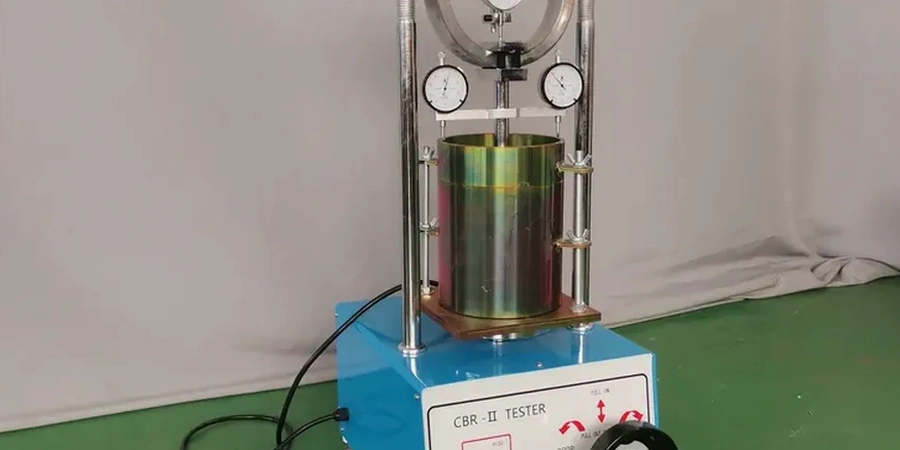
A contractor we worked with on Clayton Road had a nightmare scenario. The aggregate base looked perfect—tightly graded, well compacted—but the pavement failed within two seasons. The culprit? Subgrade saturation during winter rains, something the standard Proctor didn't catch. That's when a soaked CBR test becomes non-negotiable. In Concord, where the native soil shifts from sandy loam near Todos Santos Plaza to expansive clay toward Lime Ridge, guessing your subgrade modulus is a costly gamble. Our laboratory CBR test gives you the soaked and unsoaked bearing values that Caltrans and Contra Costa County actually require before signing off on structural pavement sections. We run the procedure per ASTM D1883, and we've seen enough local soil to know when a 3-point curve tells the real story versus when you need to dig deeper.

A soaked CBR value isn't just a number—it's the difference between a 4-inch asphalt section that lasts 20 years and a 6-inch section that fails in five.

How we work

Not all CBR numbers are equal, and Concord's geology proves it. Samples from the Kirker Pass area often show a sharp drop in bearing capacity when saturated—clay minerals swell, and that 15% CBR you banked on drops to 4%. Compare that to the better-draining gravelly soils near the Buchanan Fields, where soaked values hold above 20%. The test itself is straightforward in principle: a piston penetrates a compacted specimen at 0.05 inches per minute, and we plot stress versus penetration. But the preparation makes or breaks the result. Our lab team compacts each lift with the same energy you'll use in the field—we match the Proctor curve from a companion Proctor density test to ensure the lab specimen mirrors site conditions. We then soak the sample for 96 hours if the design calls for it, measuring swell before penetration. For projects with marginal subgrade, we often recommend pairing the CBR with a grain size analysis to understand why the soil behaves the way it does—fines content above 35% is a red flag we see frequently in central Concord.
Laboratory CBR Testing in Concord CA — Reliable Subgrade Strength Data
Technical reference image — Concord California

Local ground factors

We've reviewed enough failed pavement cores in Concord to spot a pattern: the design CBR was based on a single unsoaked test from a summer sample. That works fine for the six dry months, but when the water table rises in the Ygnacio Valley basin, the subgrade turns to mush and the asphalt tensile strain doubles. The CBR method has a built-in limitation—it's an index test, not a fundamental strength measurement. A 3% CBR in a high-plasticity clay doesn't tell you about long-term consolidation under repeated truck loads. That's where engineering judgment matters. We flag soils with plasticity index above 25 because they're prone to volume change, and we recommend a soaked test even when the county doesn't explicitly require it. The cost of redoing a parking lot in the Sunvalley Mall area dwarfs the cost of getting the right CBR data upfront.

Need a geotechnical assessment?

Reply within 24h.

Email: contact@geotechnicalengineering1.com

Reference parameters

ParameterTypical value
Test StandardASTM D1883-21
Specimen CompactionPer ASTM D698 or D1557 (Proctor)
Soaking Period96 hours (standard), configurable
Surcharge Weight4.5 kg minimum, per specification
Penetration Rate0.05 in/min (1.27 mm/min)
Reported ValuesCBR at 0.1 in and 0.2 in, swell %
Sample TypeRemolded, undisturbed Shelby tubes accepted

Other technical services

01

Standard CBR (Soaked and Unsoaked)

Full ASTM D1883 procedure with 96-hour soak, swell measurement, and load-penetration curve. Ideal for structural pavement design per Caltrans and AASHTO methods. We report CBR at 0.1-inch and 0.2-inch penetration, corrected for surface irregularities.

02

CBR with Companion Proctor and Classification

Combined package that establishes the moisture-density relationship first, then compacts CBR specimens at optimum moisture. Includes Atterberg limits and grain size distribution. Recommended when the subgrade soil type is unknown or variable across the site.

Relevant standards

ASTM D1883-21: Standard Test Method for California Bearing Ratio (CBR) of Laboratory-Compacted Soils, ASTM D698 / D1557: Standard Test Methods for Laboratory Compaction Characteristics of Soil (Proctor), Caltrans Highway Design Manual, Chapter 600: Pavement Engineering, AASHTO T 193: Standard Method of Test for CBR of Laboratory-Compacted Soils

Common questions

What does a laboratory CBR test cost in Concord?

A standard soaked CBR test (ASTM D1883) with companion Proctor typically runs between $110 and $180 per specimen, depending on whether we're working with remolded bulk samples or undisturbed Shelby tubes. The price includes the 96-hour soak, swell measurement, and the load-penetration report. If you need multiple points for a moisture-density curve or additional classification tests, we'll quote those separately.

How long does it take to get CBR results?

Count on 5 to 7 business days from sample receipt. The soaking period alone is 4 days per the standard, and we don't cut corners on that. If it's a time-sensitive project—say, a repaving job on Willow Pass Road—we can expedite the Proctor compaction the same day and start the soak immediately. Rush processing is available but depends on current lab queue.

Do I need a soaked or unsoaked CBR for my Concord project?

For most pavement designs in Contra Costa County, the soaked CBR controls. Concord's winter rainfall and shallow groundwater in areas like the Monument Boulevard corridor mean the subgrade will see saturated conditions at some point. An unsoaked test alone is risky. We typically run both if the budget allows, but if you have to pick one, go with soaked—that's what the Caltrans design catalog assumes.

Can you run a CBR on aggregate base material?

Yes, but the procedure adjusts. For graded aggregate base—Class 2 or Class 3 per Caltrans specs—we compact in a 6-inch mold with modified Proctor energy and no soaking. The CBR values for good base material should exceed 80%. We've tested crushed stone from local Concord quarries that hit above 100%, which is excellent. Just note that oversized particles above 3/4 inch need to be scalped and replaced per ASTM D1883.
Location and service area

We serve projects across Concord California and surrounding areas. More info.

View larger map