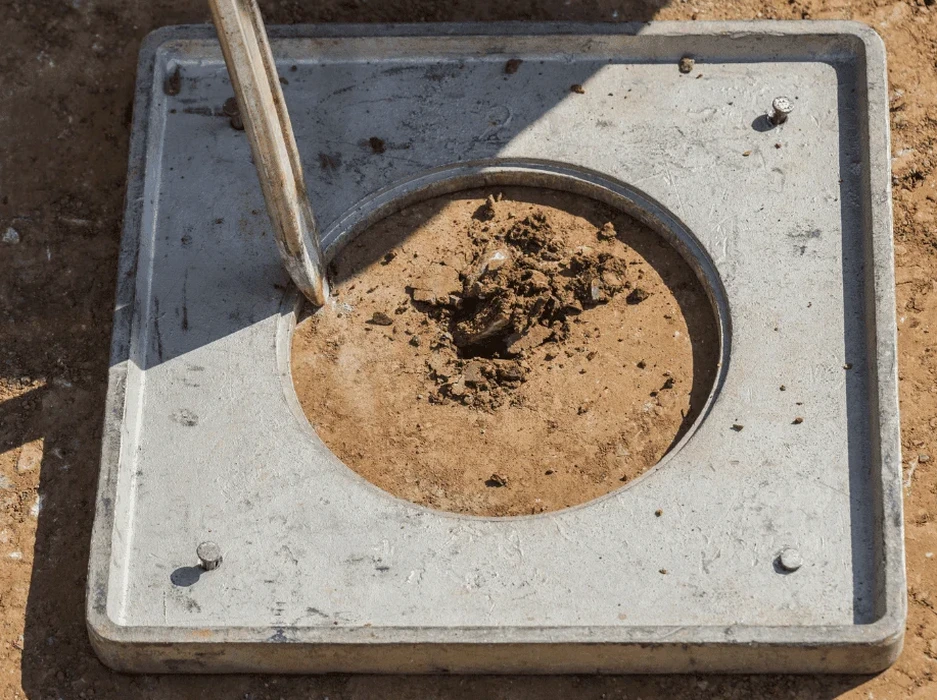
Chapter 18 of the IBC and ASCE 7-22 Section 11.8.3 don't leave room for guesswork when you're building on Concord's deep alluvial soils. We run site-specific liquefaction potential evaluations because the mapped Vs30 values across the Ygnacio Valley vary more than most engineers expect, and a generic site class D assumption can cost you a foundation redesign mid-project. Over the last decade, our team has pulled SPT samples from dozens of borings between Willow Pass and Monument Boulevard, and the fines content alone tells a story: layers of loose sandy silt at 15 to 25 feet that trigger a closer look under MCEₓ shaking. The grain-size analysis we pair with each SPT run confirms whether those silts classify as SM or ML, which directly feeds the factor of safety against liquefaction in a Idriss-Boulanger framework. When the subsurface profile gets complicated, we layer in CPT soundings to capture continuous tip resistance and pore pressure data without sample disturbance gaps.
A factor of safety of 1.0 on paper means settlement in the field: we target FS ≥ 1.2 for commercial structures.
Common questions
What is the typical cost range for a liquefaction analysis in Concord?
A full site-specific liquefaction study in Concord runs between US$2,690 and US$4,340 depending on the number of borings, depth to competent bearing strata, and whether cyclic lab testing is required. This includes the SPT-based triggering analysis, fines content determination, and the signed report with FS profiles.
How deep do you drill for a liquefaction assessment here?
We typically extend borings to 50 feet below grade in the Ygnacio Valley basin or until we hit competent Pleistocene alluvium with N₁₆₀ values above 30 blows per foot. The CBC requires evaluation of all potentially liquefiable layers within the upper 50 feet unless bedrock is encountered shallower.
Does Concord require a site-specific seismic hazard analysis?
The Contra Costa County Building Department and the City of Concord enforce CBC Section 1803, which triggers a site-specific liquefaction evaluation when mapped seismic hazard zones or shallow groundwater exist. A generic ASCE 7 site class D is sometimes accepted for small residential, but any commercial or essential facility needs the full analysis with SPT data in hand.
What does the final report include?
The deliverable contains boring logs with N-values, laboratory test results, the CSR/CRR factor of safety profile per layer, post-liquefaction volumetric and shear-induced settlement estimates, a lateral spreading displacement assessment if applicable, and a clear recommendation for foundation type and ground improvement if FS falls below 1.1.