Together, we solve the challenges of tomorrow.
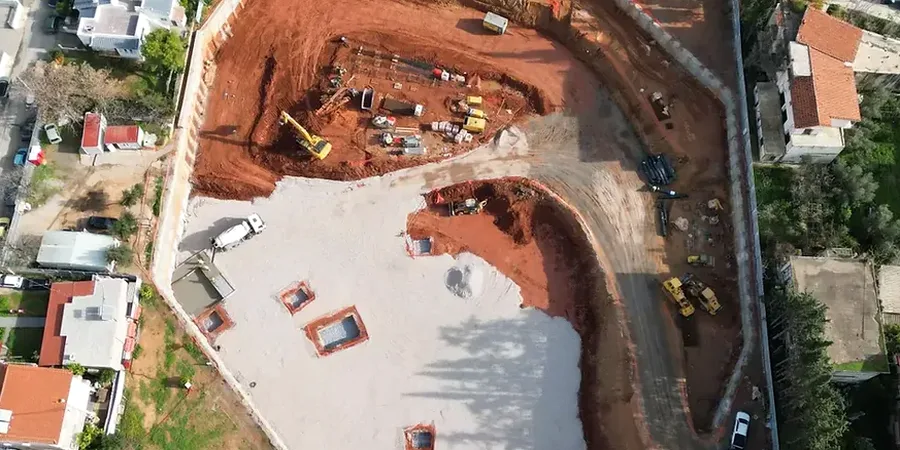
LEARN MORE →Underground excavations in Concord, California encompass the full spectrum of subsurface construction activities, from tunnel boring and shaft sinking to deep basement and utility corridor development. This category covers the geotechnical planning, design, and execution required to safely create and maintain openings beneath the ground surface in a region where urban expansion, seismic activity, and complex soil profiles intersect. For a city situated within the greater San Francisco Bay Area, underground excavation is not merely a construction technique, it is a critical enabler for infrastructure resilience, transit connectivity, and efficient land use in an increasingly dense suburban environment.
The local geology of Concord presents unique challenges for underground work. Much of the city rests on alluvial plains and valley fill deposits, with significant areas underlain by soft, compressible clays and loose to medium-dense sands. These conditions demand specialized attention to ground behavior during excavation, particularly where groundwater levels are high and can destabilize tunnel faces or shaft walls. Deeper excavations may encounter the underlying Franciscan Complex bedrock, a heterogeneous mixture of hard sandstone, shale, and serpentinite that introduces abrupt changes in strength and abrasiveness. Understanding this stratigraphy is fundamental to any underground project, and it directly informs the geotechnical analysis for soft soil tunnels that is often the first step in feasibility assessment.
Regulatory compliance in California follows a multi-layered framework that governs underground excavations. The California Building Code (CBC), which incorporates the International Building Code with state-specific amendments, sets baseline structural and safety requirements. For tunneling and shaft construction, Cal/OSHA's Tunnel Safety Orders (Title 8, Subchapter 20) impose strict ventilation, ground support, and emergency response mandates. Environmental review under the California Environmental Quality Act (CEQA) is typically required for public projects, addressing groundwater impacts, vibration, and settlement risks. At the municipal level, the City of Concord enforces its own grading and encroachment permits, often requiring detailed geotechnical reports and instrumentation plans before any excavation deeper than five feet proceeds in the public right-of-way.
The types of projects that rely on underground excavation expertise in Concord are diverse. BART system extensions and grade separations represent large-scale transportation tunnels, while utility providers frequently install or upgrade water, sewer, and stormwater conduits through trenchless methods to minimize surface disruption. Commercial and mixed-use developments in the downtown core increasingly incorporate deep basements and underground parking structures, which require geotechnical design of deep excavations to manage lateral earth pressures and prevent adjacent building distress. Even smaller-scale works, such as pedestrian undercrossings or geothermal loop installations, benefit from rigorous subsurface characterization. Across all these applications, continuous geotechnical excavation monitoring provides the real-time data needed to verify design assumptions and trigger contingency measures when ground movements approach allowable thresholds. By integrating site-specific geology, regulatory adherence, and adaptive construction practices, underground excavations in Concord can be executed safely and efficiently, supporting the city's growth without compromising its geological stability.
The main risks stem from soft alluvial soils prone to squeezing and face instability, high groundwater that can cause sudden inflows, and the potential for encountering erratic Franciscan bedrock. Seismic shaking can induce ground deformation or liquefaction in sandy layers, threatening excavation integrity. Proper site investigation, pre-support measures, and real-time monitoring are essential to mitigate these hazards.
Cal/OSHA Tunnel Safety Orders (Title 8, Subchapter 20) are the primary safety regulations, covering air quality, illumination, ground support, shaft access, and emergency procedures. The California Building Code governs structural design aspects, while CEQA mandates environmental impact analysis. Concord's municipal code adds local permitting and grading requirements that must be satisfied before excavation begins.
In the prevalent soft clays and sands above the water table, sequential excavation methods with shotcrete lining or earth pressure balance tunnel boring machines are common. Where groundwater is high, ground freezing or dewatering may be necessary. For deeper reaches into Franciscan bedrock, harder rock tunneling methods like drill-and-blast or roadheader excavation become more applicable due to increased strength and abrasiveness.
Monitoring is critical for verifying design assumptions and providing early warning of adverse ground movements. Instruments such as inclinometers, extensometers, piezometers, and surface settlement points track deformation, pore pressure changes, and structural response. The data allows engineers to adjust construction parameters, trigger contingency support measures, and ensure the safety of workers and adjacent properties throughout the project duration.
We serve projects across Concord California and surrounding areas.