We run the triaxial frame in our lab six days a week—three cells cycling through CD, CU, and UU stages, each specimen trimmed to ASTM D4767 dimensions. When a Concord project calls for a soil mechanics study, the core work happens here: confining pressures dialed in, pore pressure transducers calibrated, and the load frame recording deviator stress until failure. For samples taken near the Concord Naval Weapons Station redevelopment zone or the Todos Santos Plaza area, we often pair shear-strength data with a CPT test log to correlate tip resistance with lab-derived friction angles. The lab is ISO 17025-accredited, so every test report carries defensible numbers—not generic textbook values. If the borehole log shows interbedded clay and sand from the Quaternary alluvium that underlies much of central Concord, we schedule Atterberg limits immediately to confirm plasticity before the consolidation stage begins. Quick turnaround matters here; contractors breaking ground on Clayton Road don’t wait two weeks for a friction angle.
A Concord soil mechanics study lives or dies by the triaxial saturation B-value—if it’s below 0.95, we back-pressure until it isn’t.
How we work
Soils change fast across Concord’s micro-basins. East of Highway 242, near the Lime Ridge Open Space, we see residual clay with PI values pushing past 35—sticky, expansive, and tough to compact without moisture control. West of the freeway, closer to the industrial corridor along Port Chicago Highway, the profile flips to sandy silt and loose alluvium that barely holds a Shelby tube sample. A soil mechanics study has to account for both ends of this spectrum, and our workflow reflects that: every sample gets a visual-manual classification per ASTM D2488 before we decide which mechanical tests to run. When the client needs bearing capacity for a shallow foundation on the sandy side, we run direct shear at in-situ density and follow up with a
Proctor test to tie compaction specs to the same material. For the expansive clays on the east side, we add one-dimensional consolidation to flag settlement risk and swelling pressure. The lab benches here handle about forty disturbed and undisturbed samples a week, and the majority come from Concord addresses—residential additions, tilt-up commercial, and the occasional public works retaining wall along Galindo Creek.
Local ground factors
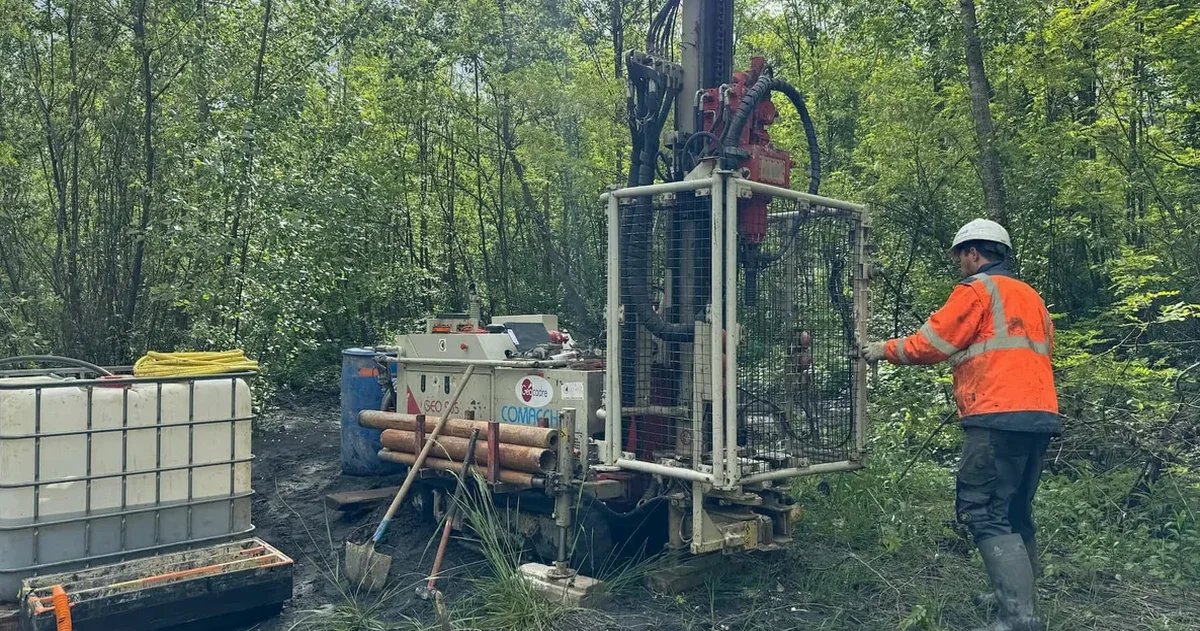
In Concord, the biggest geotechnical surprise is undocumented fill that nobody told the city about. We’ve pulled cores on Meadow Lane where the top six feet were construction debris mixed with expansive clay, and the owner had no record of import. A soil mechanics study that stops at five feet misses that entirely. Our drillers log every foot of auger refusal and flag any change in blow count, color, or odor because that’s where the risk hides. Another pattern: seasonal groundwater perched on the clay lenses near Newhall Community Park. We’ve measured water at eight feet in March and dry at fourteen feet by August, and that swing matters for settlement calculations, especially when the lab reports a Cc above 0.35. We also keep an eye on liquefaction potential in the Holocene alluvium mapped by the USGS along the Concord fault zone; when SPT N-values drop below 15 in saturated sand below ten feet, we flag it for a liquefaction assessment before the structural engineer finalizes the foundation depth.
Relevant standards
ASTM D4767-11 — Consolidated-Undrained Triaxial Compression Test, ASTM D1586-18 — Standard Penetration Test (SPT) and Split-Barrel Sampling, ASTM D4318-17e1 — Atterberg Limits (Liquid, Plastic, and Shrinkage Limit), ASTM D1557-12e1 — Modified Proctor Compaction (56,000 ft-lbf/ft³), ASTM D2435/D2435M-11 — One-Dimensional Consolidation Properties of Soils
Common questions
How much does a soil mechanics study cost for a typical Concord residential lot?
For a single-family residential project with one borehole, SPT sampling, and a full index-and-shear test suite, the cost ranges from US$3,240 to US$5,680. The spread depends on depth, number of samples, and whether triaxial or consolidation testing is required.
How long does the lab testing phase take after drilling in Concord?
Index testing (grain size, Atterberg, moisture) takes two to three business days. Triaxial and consolidation testing add five to seven business days because of saturation and incremental loading requirements. We can accelerate the schedule for a surcharge if the project is on a tight construction timeline.
What soil parameters do you report from a triaxial test?
From a CU triaxial with pore pressure measurement (ASTM D4767), we report effective cohesion c’, effective friction angle φ’, total stress parameters c and φ, deviator stress at failure, and excess pore pressure curves. For UU triaxial (ASTM D2850), we report undrained shear strength Su and stress-strain plots.